
Sustainable Choices In Focus at Jet Aviation Design Studio
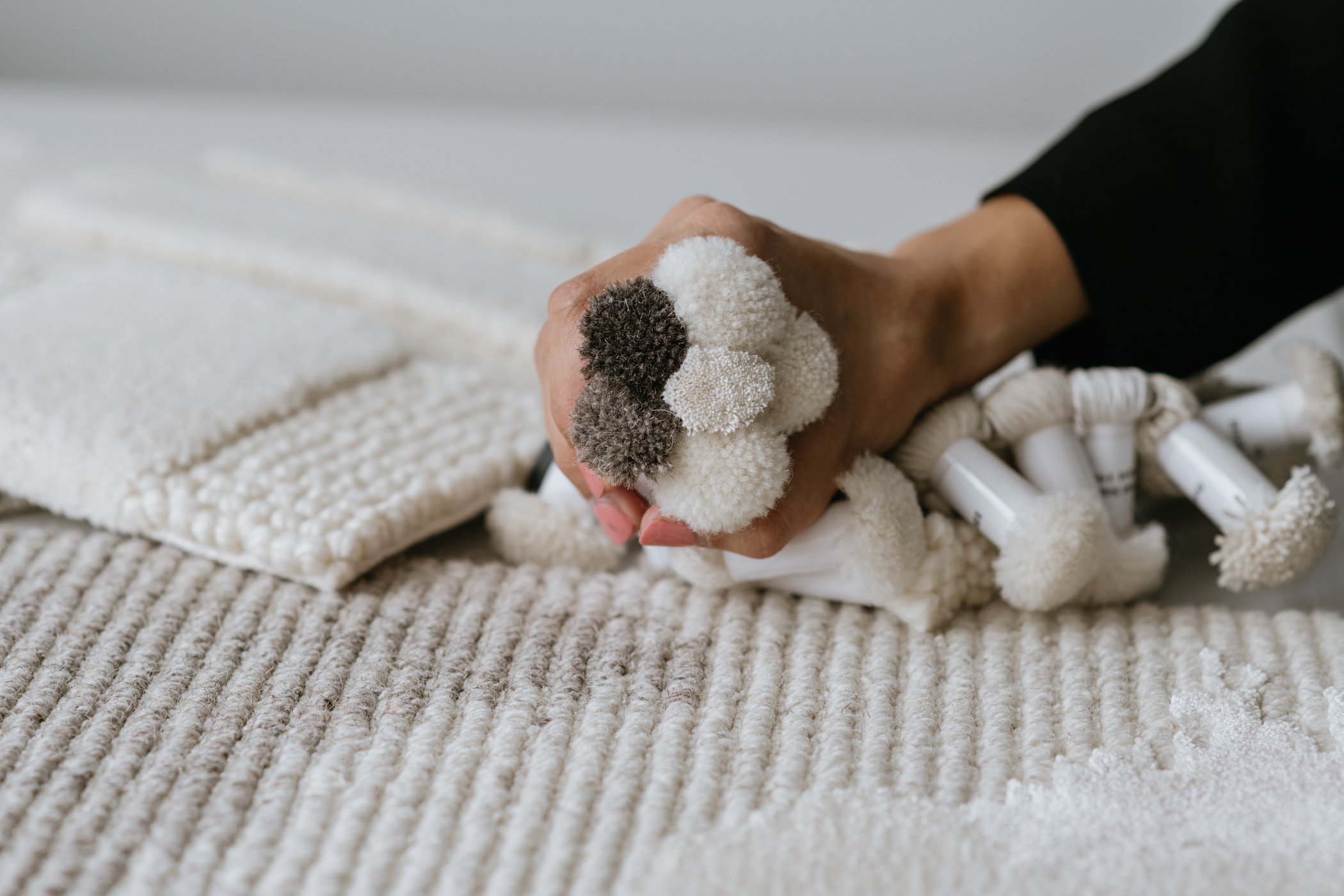
Take a look behind the scenes at Jet Aviation’s Design Studio. Embedded within our Completions center, the team offer customers a wide range of materials for customer interiors, including some innovative and more sustainable options.
Jet Aviation designs, builds and certifies highly bespoke VVIP interiors for business aircraft at our Completions center in Basel, Switzerland. These fully customized interiors are one of a kind, every time. From the floorplan, to the final finishes, each customer has a wide variety of choices to make, to ensure their aircraft is exactly the way they want it, in both form and function.
A core part of every project team is our in-house Design Studio, who guide customers through this process. The team ensure customers have enough information and options at their fingertips to make informed decisions with confidence.
Part of these efforts include showing customers the sustainable material choices available to them, from undyed carpets and recycled leather, to working with local suppliers in order to reduce transportation-related emissions.
Below, we take a tour of our Design Studio’s materials room to learn how the team are also offering customers new sustainable and innovative options.
“By making our customers aware of the sustainable materials on offer, we can do our part in supporting sustainable initiatives in our industry.”
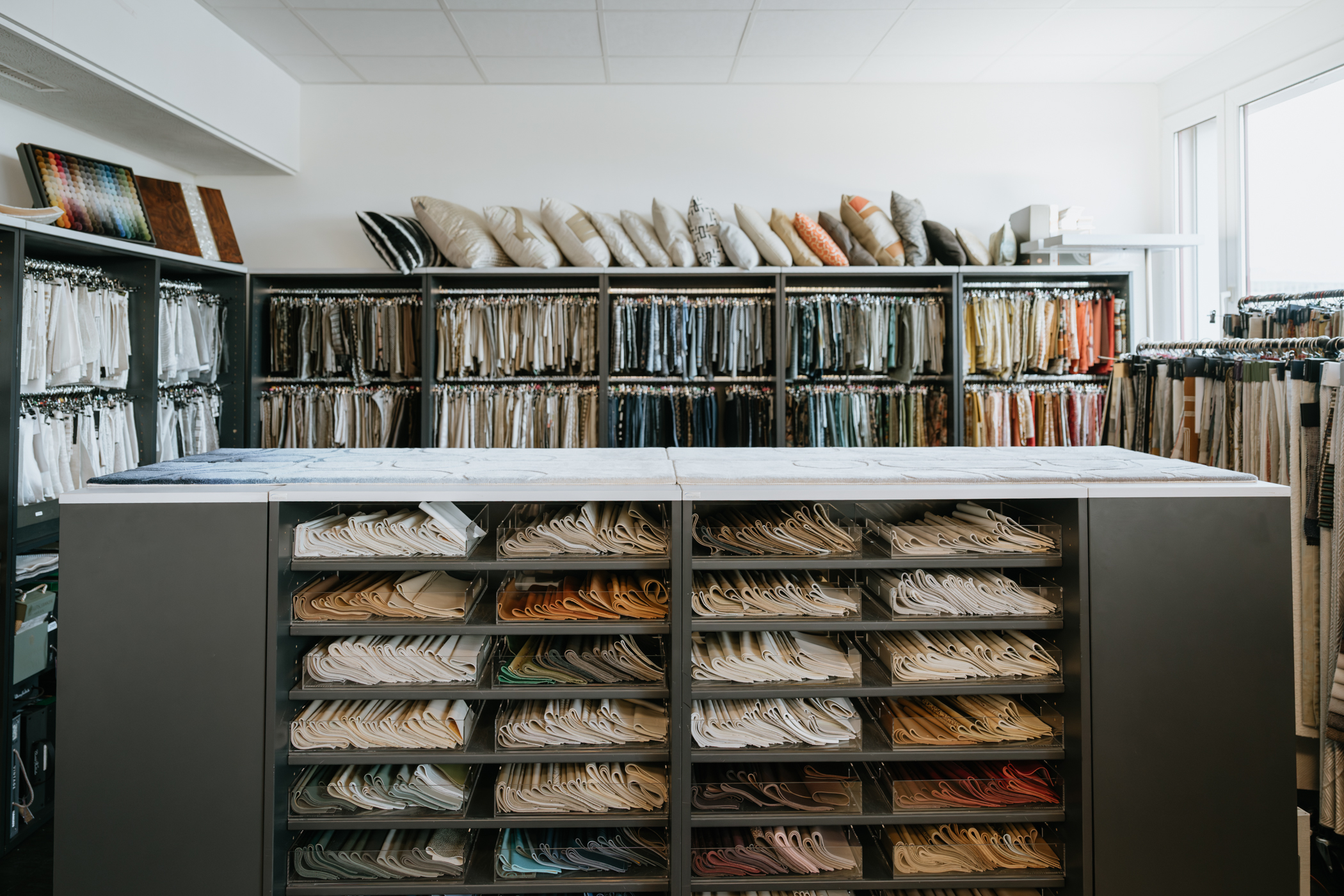
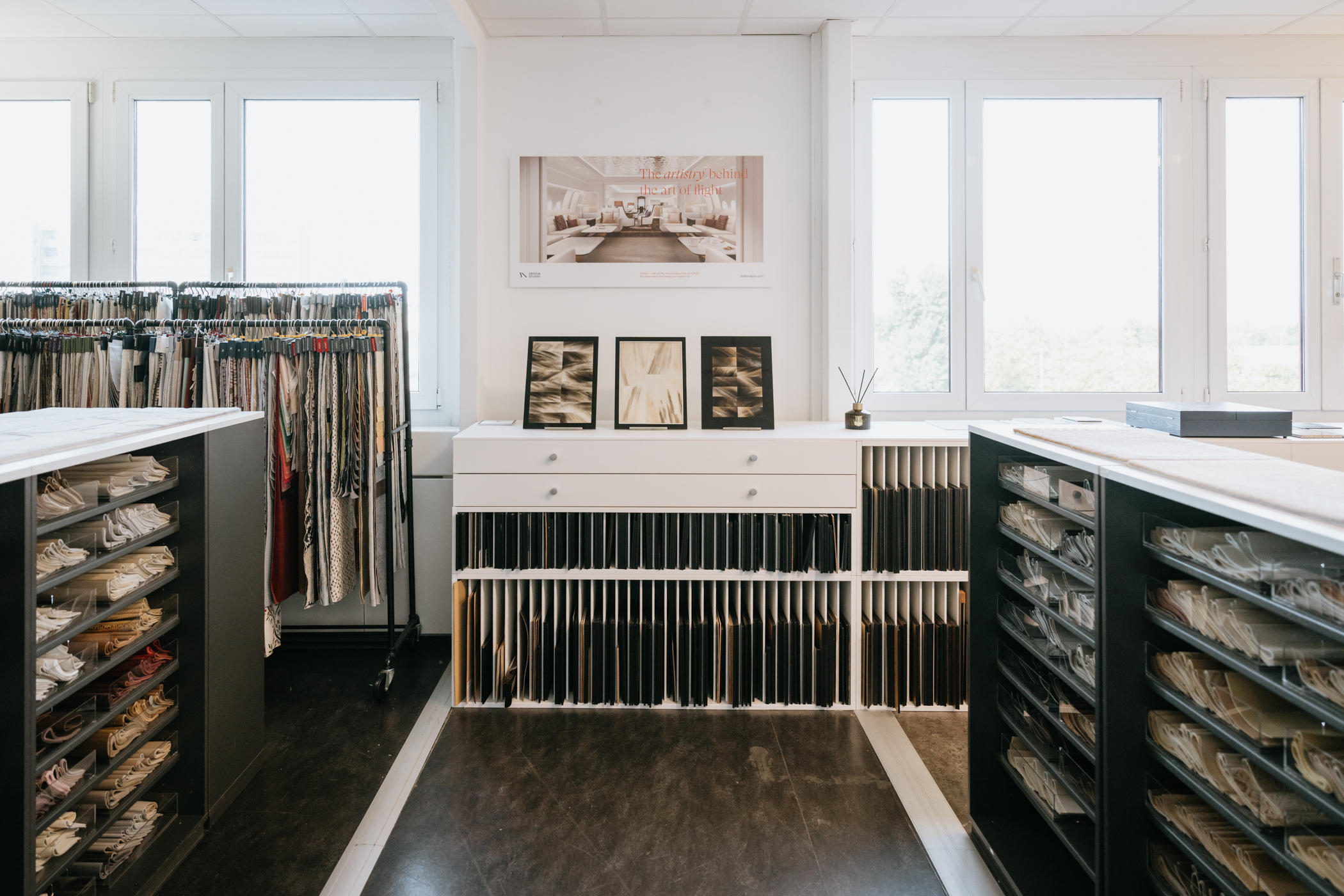
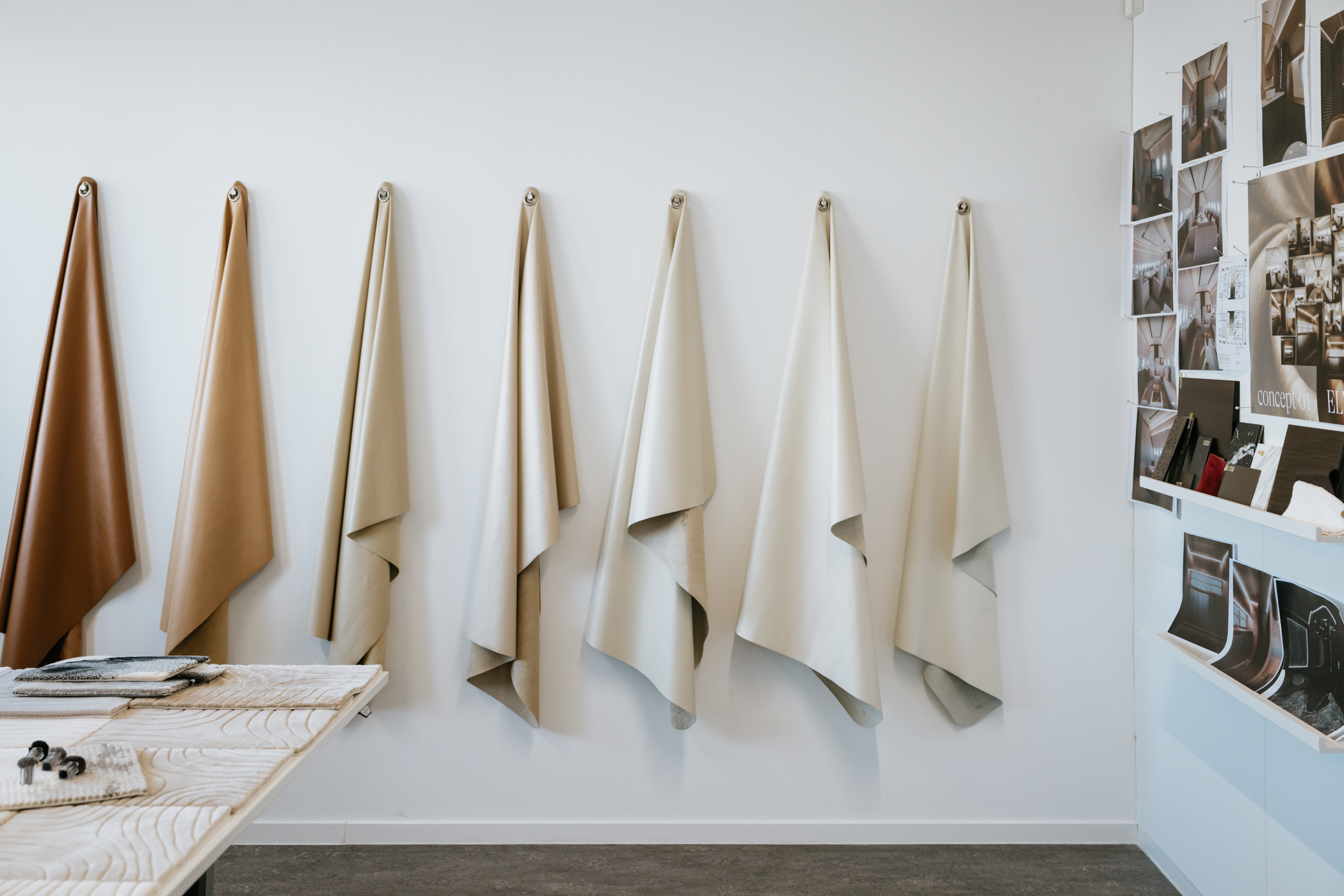
At our headquarters in Basel, the Design Studio’s offices feature a dedicated materials room. The team use this library of premium materials as their basis when developing ideas and proposals for Completions and Refurbishment projects. From fabrics and leather, to wood and stone, there is a wide variety of options available.
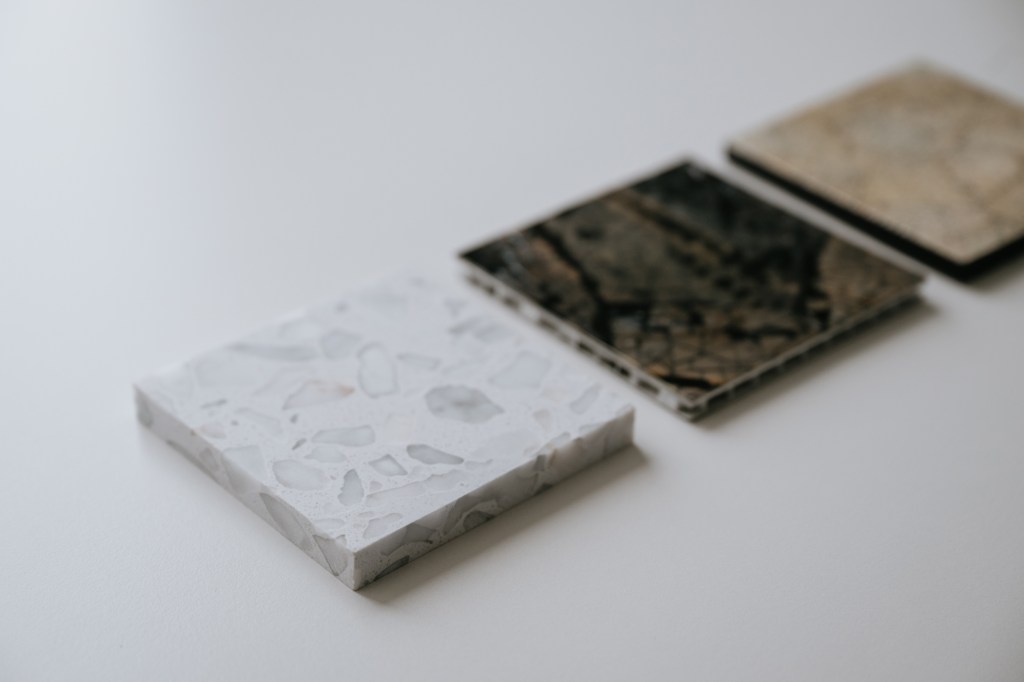
The Design Studio have a range of sustainably sourced and even recycled materials that are available for customers, including:
– Reconstituted veneer that comes from fast-growing wood in sustainably managed forests
– Materials produced from all natural fibers and food waste such as eggshells
– Recycled leathers and leathers made from non-toxic tanning agents
– Sugarcane-based microfiber used in ceiling materials
– Excess materials from past projects that can be quickly sourced for refurbishment projects.
Suzy Wintenberger, Senior Color Material and Finish Specialist, noted that the majority of the materials in the Design Studio’s library come from suppliers in Europe. This helps to reduce the overall carbon footprint by removing long-haul transportation from the process.
“Most of the world’s highest-quality suppliers are based in France, the United Kingdom, Italy, and Germany. This means we are well-located in Basel to directly access really experienced and knowledgeable partners. We work with the best in the field, with the best craftsmanship and artisans. When we go further afield for a material it’s for particularly specialist product,” said Suzy.

The team have devised an identification system to highlight materials in the library that are sustainably sourced. They even designed and printed their own green, sustainability-themed stickers. This helps to guide all team members to sustainable materials when picking out suitable options for a given design project or customer brief. Materials that contain recycled or organic fibers, or originate from sustainable sources earn a green sticker.
“All our fabrics must have a minimum amount of natural fibers anyway to pass flammability tests. This also enhances the overall aesthetic quality and improves the functionality of the materials. It’s not a choice between sustainability and quality. These often come hand-in-hand,” said Suzy.
On the digital side, a dedicated database keeps track of materials that have been left over from past projects. These materials can then be used for fast turnaround Refurbishment projects, without having to wait for supplier coordination and transportation.
“Its not just about sustainability and avoiding waste. It’s also about our own efficiency and offering quick solutions to customers,” said Suzy.
“The customer’s desired style and aesthetic determine all our choices. But when there is a sustainable material that meets the same need, we will ensure that option is communicated.”
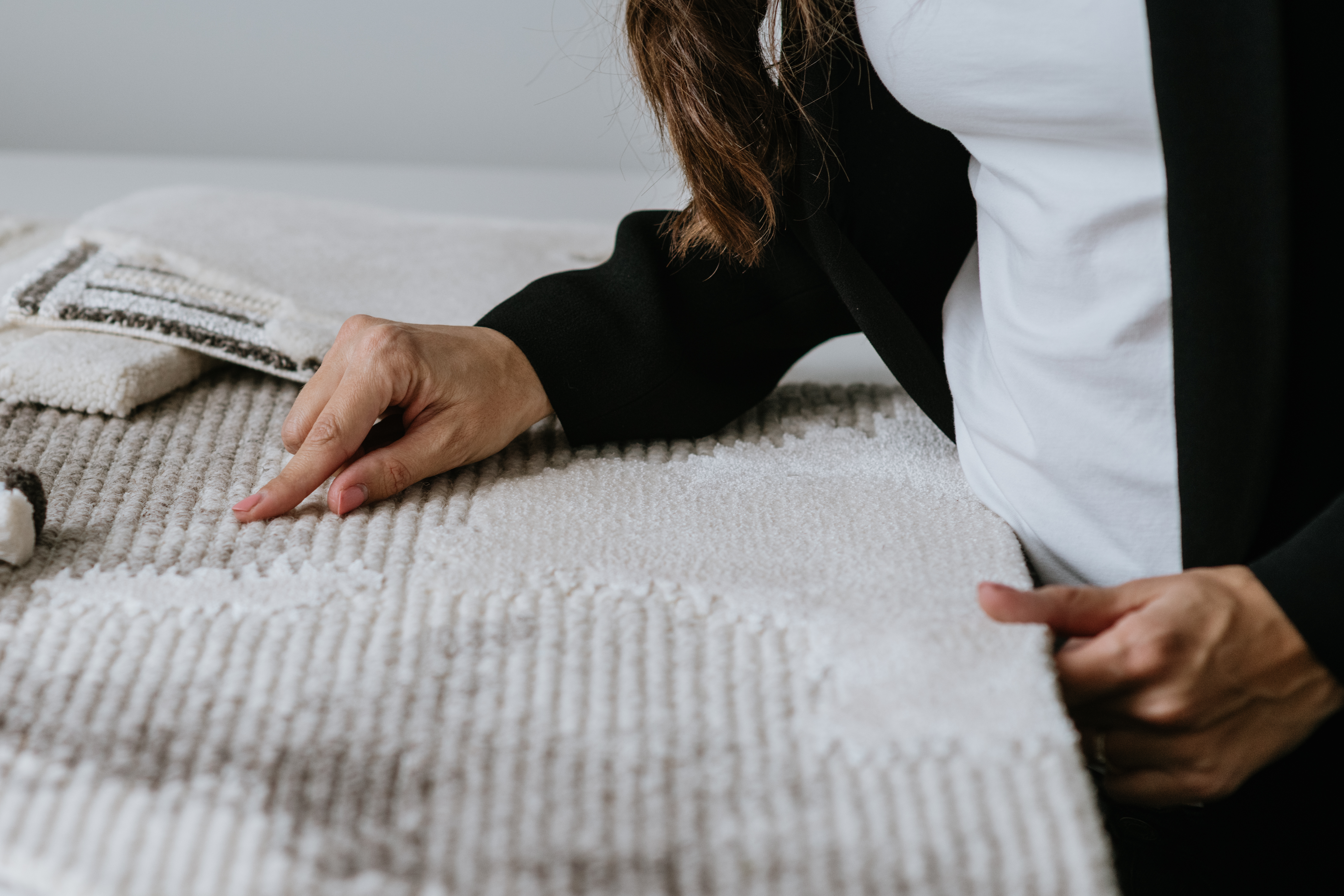
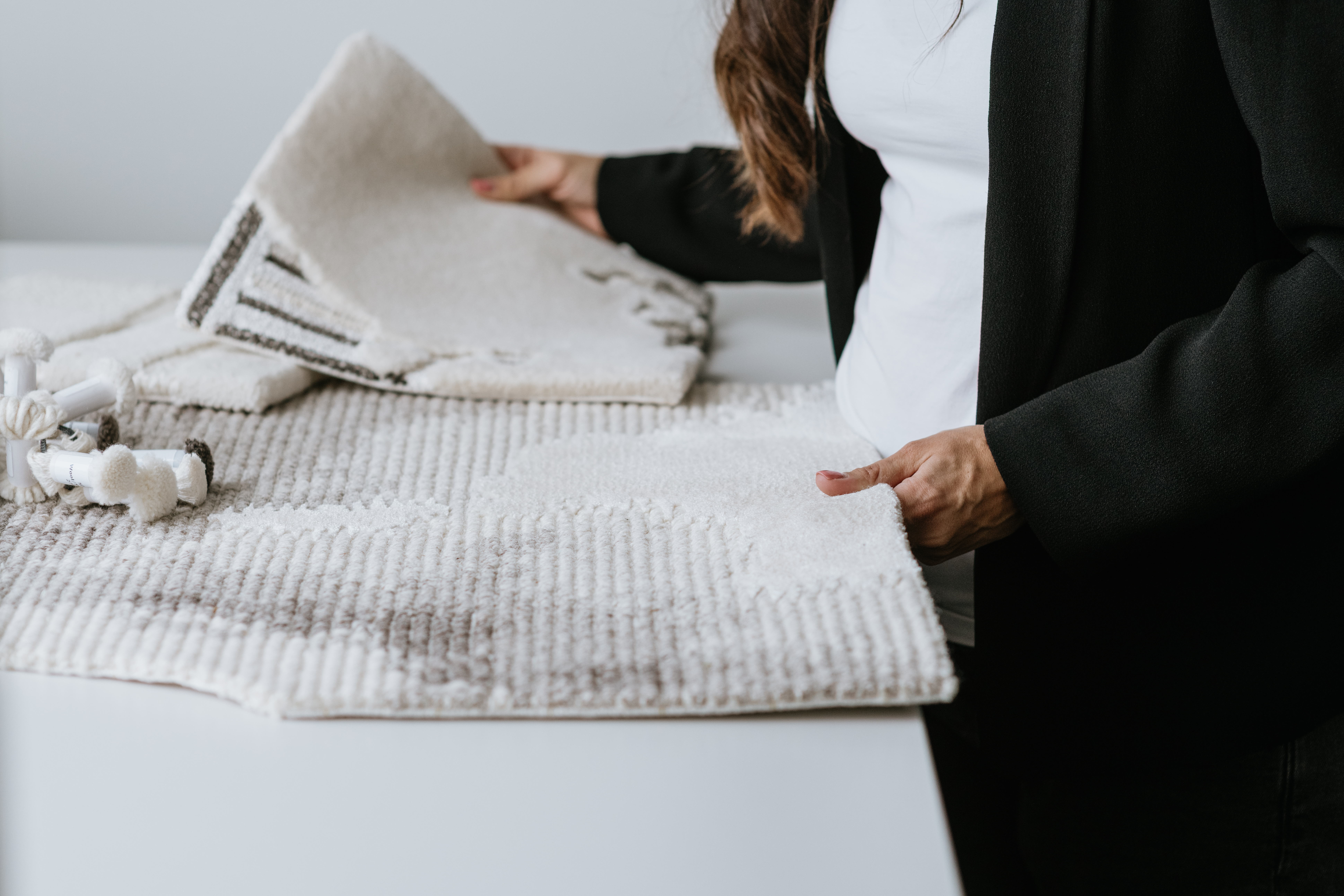
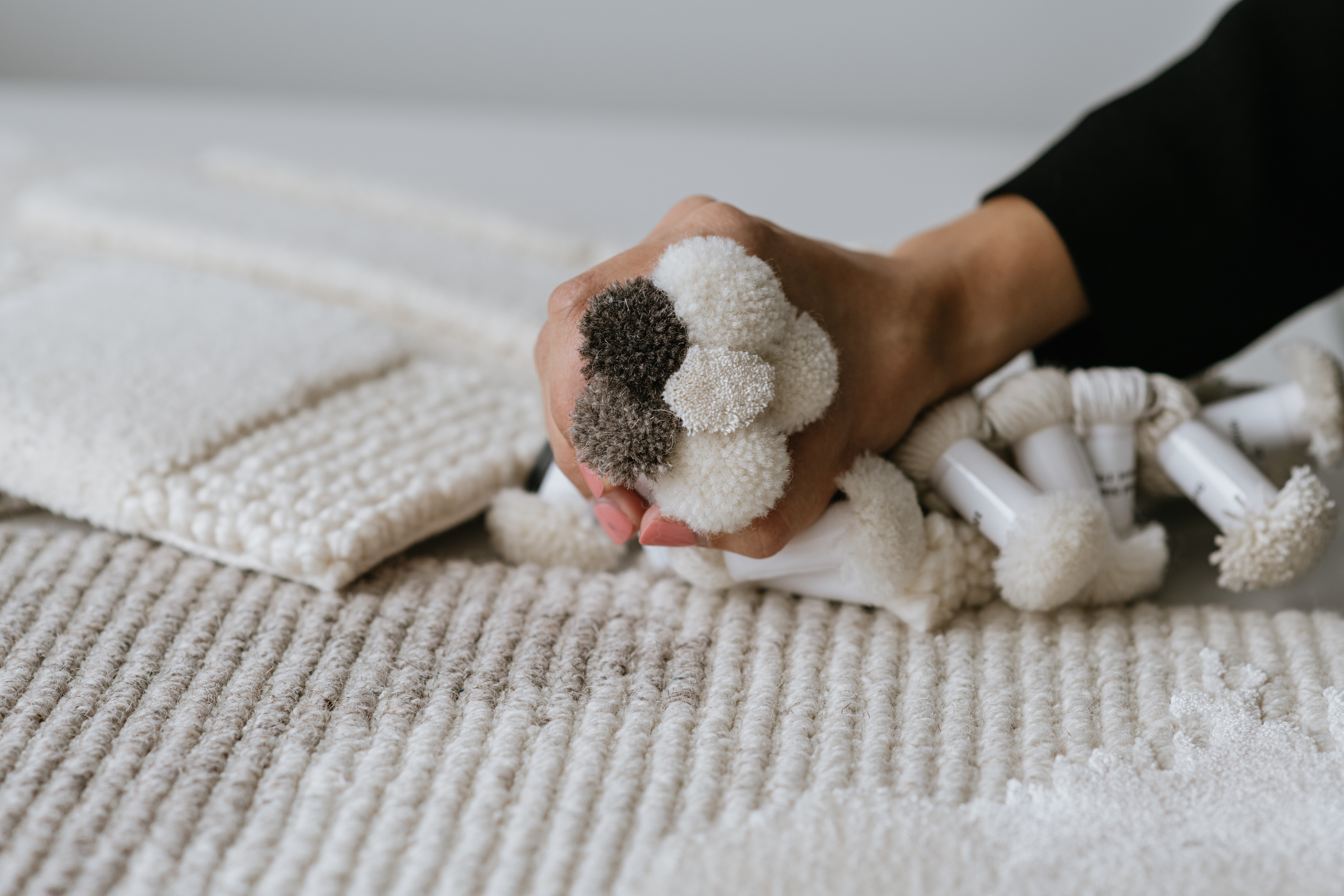
Undyed carpets are a recent addition to the sustainable materials we can source for our customers. Removing dyes from the production process reduces the amount of chemicals and water required.
“This carpet uses a variety of wools and silks, showcasing the materials’ natural pigment. As well as the reduction in waste, the emphasis is on craftsmanship and the use of the finest materials,” said Suzy.
“As well as the reduction in waste, the emphasis is on craftsmanship and the use of the finest materials.”
“By making our customers aware of the choices on offer, we can do our part in supporting sustainable initiatives in our industry. We are also seeing many of our suppliers moving in this direction too. They are developing innovative sustainable options for the market,” said Grischa Schmidt, Senior Director Interior Design Studio.
“The customer’s desired style and aesthetic determine all our choices. But when there is a sustainable material that meets the same need, we also share that option.”